

Introduction
The ongoing debate over the use of unmanned aerial vehicles (UAVs) – and particularly unmanned combat aerial vehicles (UCAVs) – on the battlefield is growing increasingly vehement as time passes. However, it is essential to make a categorical distinction between UAVs and UCAVs, because the different usages of these two types of systems will lead to variance in the supporting arguments, and thus to the consequent verdict on the desirability of the overall technology.
Unmanned aircraft systems, comprising UAVs and UCAVs, are controlled either by pilots on the ground or autonomously, following a pre-programmed mission. The categorization of these unmanned systems is primarily based on their objectives. In the case of UAVs, the principal aim is real-time reconnaissance and surveillance. UCAVs are armed versions loaded with missiles and bombs. UAVs have varied uses, which stretch far beyond military combat and include aerial surveillance, search and rescue operations (a progressively expanding sphere), power-line and pipeline inspections in inaccessible regions or high-altitude terrain, surveillance and data relay during natural calamities, disaster management, border patrol and transborder refugee tracking, maritime surveillance and coast guard operations, detection and monitoring of radiation leaks or oil spillage (both at sea and along the coastlines), and intelligence collection.
Regional instability in the South Asian subcontinent coupled with India’s own internal security threats – the perils of which stretch from urban terrorism to armed insurgencies – have proved to be formidable challenges to the long-term peace and stability of India. Its precarious neighborhood is witness to severe internal socio-political and economic strife. Furthermore, the security situation within India is largely colored by an ongoing, externally sponsored proxy war, which includes, as India’s Ministry of Home Affairs has stated, “problems of terrorism in the hinterland of the country, cross-border terrorism in Jammu and Kashmir, militancy in the northeastern states and left wing extremism in certain states.”1 Within this context, India maintains and employs a modest fleet of unarmed UAVs that are strictly intended for civilian and paramilitary usage. It is to be expected that India will make use of these technologies since it shares an approximately 15,000-kilometer land border and a 7,500-kilometer coastline, including the island territories.
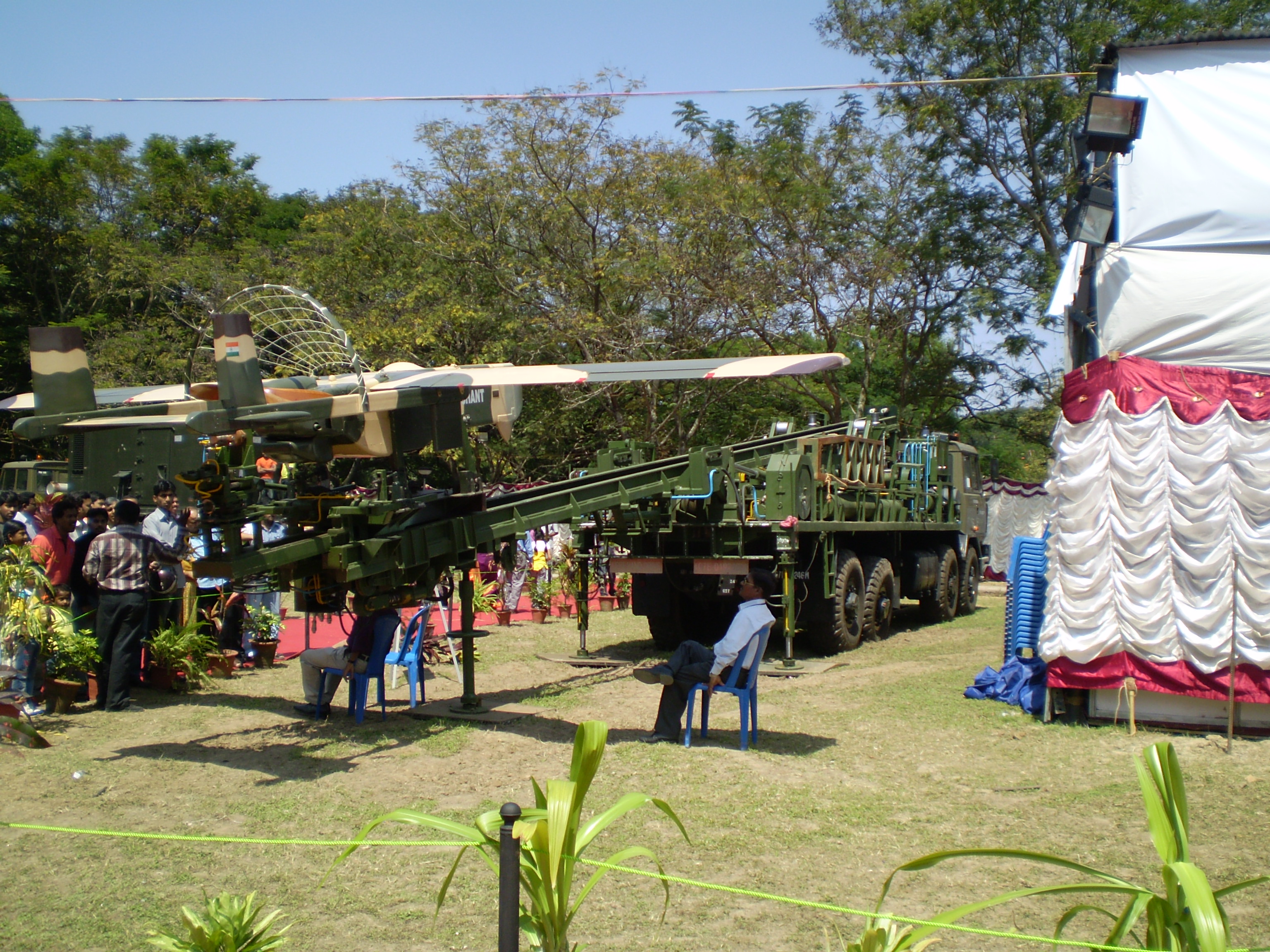 Similarly, the Indian army initially had obtained Searcher Mk Is and IIs, which could operate at altitudes of 15,000 feet, for use along the border with Pakistan. These systems, however, have limited endurance and performed suboptimally at high altitudes, leading the army to instead adopt the Heron. More specifically, in the case of Jammu and Kashmir, UAVs featuring electronic sensors, on-board cameras, and rechargeable batteries are sought since they provide excellent inputs on intrusions and cease-fire violations along Jammu and Kashmir’s Line of Control and the International Border. Although not confirmed, given the classified nature of the subject as it pertains to national security, there is a reported plan “to progressively induct drones right down to the battalion-level [by 2020],” with the army “already establishing new UAV bases from Nagrota and Manasbal in Jammu and Kashmir to Kumbhigram and Lilabari in the northeast.”14
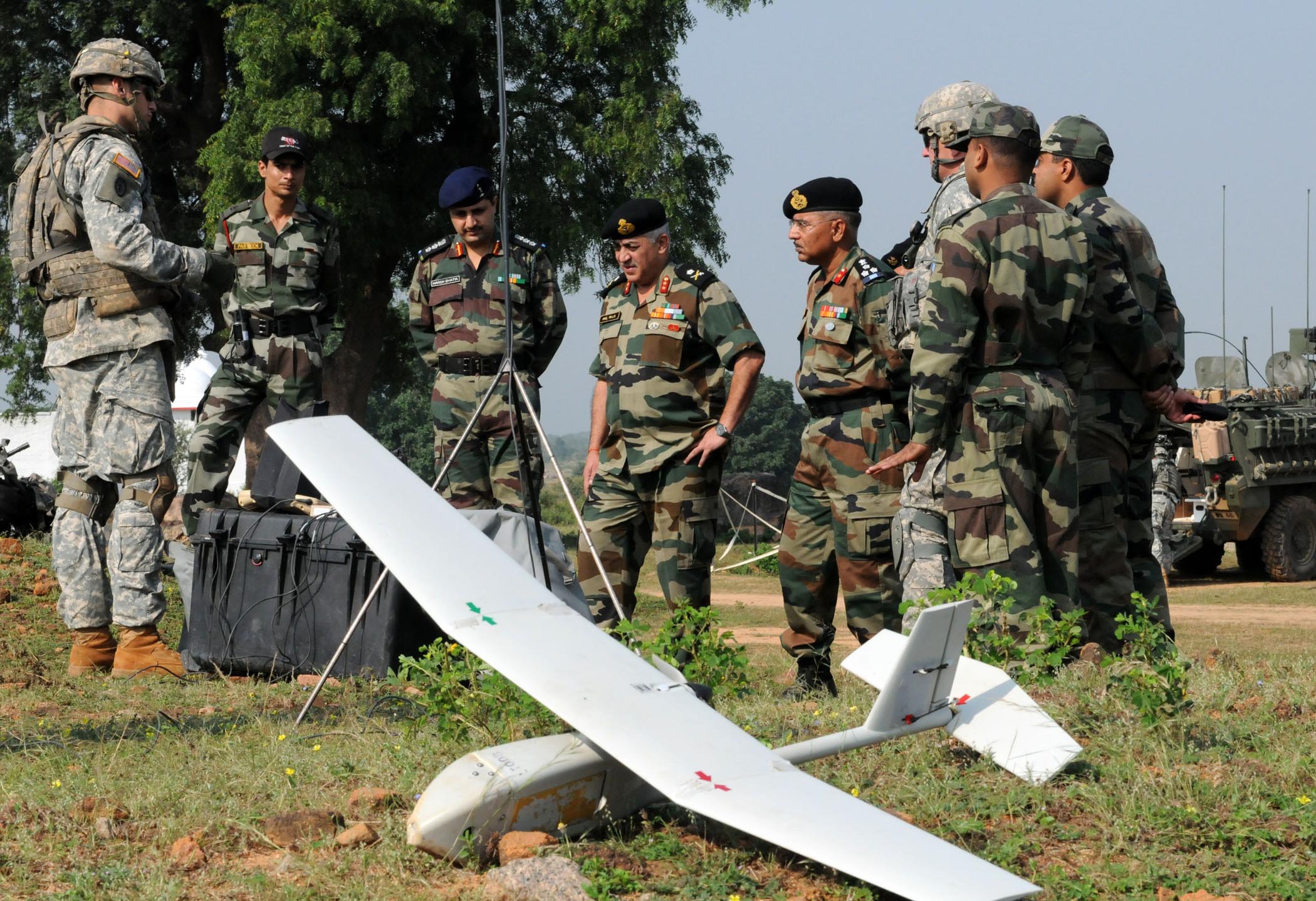 The utility of unmanned systems, the latent potential and benefits of which are not yet fully understood, need to be gauged periodically. Given the complexities of unconventional, subconventional, counterinsurgency, and asymmetric warfare, it is time to steer an informed debate in a direction wherein military technologies are viewed as enablers and enhancers that minimize existential threats to peace and to the security of both citizens and nation-states. It is paradoxical that we live in a world where attackers who incite violence and terror are hard to identify and trace – thereby challenging cogent response options. Unarmed UAVs provide a new and compelling spin to the larger debate on deterrence by denial and deterrence signaling, as they offer decisive headway vis-à-vis aerial surveillance and reconnaissance of land and coastal borders. Most significantly, UAV-provided intelligence leads to proactive, anticipatory action by states to thwart imminent terrorist or insurgent attacks and safeguard the nation.